

 Towards the end of each glacial period and into
the begining of the following interglacial period, there is a 12,500 year interval
when the sea level of the Bering Sea has dropped low enough to expose the continental
shelf between Asia and North America. This exposed sea bed is rich with nutrients
from decomposed sea life, and permits the growth of mosses and lichens
soon after it rises out of the sea. The land thus formed is called the
Bering Land Bridge, and it remains viable for many thousands of years before it
sinks below the waves due to the rising sea levels later in the interglacial
period.
Towards the end of each glacial period and into
the begining of the following interglacial period, there is a 12,500 year interval
when the sea level of the Bering Sea has dropped low enough to expose the continental
shelf between Asia and North America. This exposed sea bed is rich with nutrients
from decomposed sea life, and permits the growth of mosses and lichens
soon after it rises out of the sea. The land thus formed is called the
Bering Land Bridge, and it remains viable for many thousands of years before it
sinks below the waves due to the rising sea levels later in the interglacial
period.
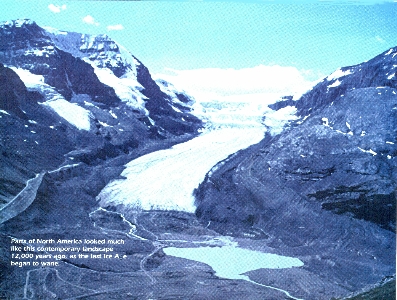
Today there are glaciers in Southern British
Columbia, Canada, that are the remnants of the great continental ice sheet of
the last glacial period called the Wisconsin.