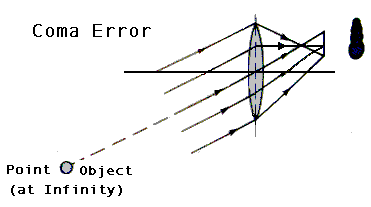
 Coma is normally produced by light rays from an
object entering the optical system from an oblique angle. Such rays come to a
partial focus on the far side of the system's optical axis, away from that axis. Coma
appears as a blob of light with a comet-like tail, travelling towards the center
of the field of view. Coma only affects the outer regions of the field of view.
Coma is normally produced by light rays from an
object entering the optical system from an oblique angle. Such rays come to a
partial focus on the far side of the system's optical axis, away from that axis. Coma
appears as a blob of light with a comet-like tail, travelling towards the center
of the field of view. Coma only affects the outer regions of the field of view.
I have heard the claim that coma error is inherant
in the design of all Newtonian telescopes, affecting those telescopes having smaller
Focal Ratios more severely. Despite the fact that many veteran
Astronomers believe this myth, it is not true as I shall demonstrate in the next
few pages.

